Why Brushing Feels Worse at Night During Pregnancy
Sometimes it is not brushing itself that feels different.
It is the timing.
What feels manageable in the morning can feel much harder at night. The same toothbrush. The same routine. The same bathroom. And yet, by the end of the day, everything can feel more delicate, more intense, and more difficult to tolerate.
For many expecting mothers, this shift feels surprisingly real.
Brushing at night can feel worse during pregnancy, not because you are imagining it, but because the body often feels different by the evening. Energy is lower. Sensitivity can feel heightened. Small discomforts that seemed manageable earlier in the day can feel more noticeable once everything has caught up with you.
The body often feels more sensitive at night
Pregnancy can make everyday sensations feel stronger.
By the evening, that can become even more noticeable. After a full day of movement, smells, meals, stress, fatigue, and physical changes, the body may simply feel less able to tolerate certain sensations in the same way.
What feels like a small brushing routine in theory can feel like one thing too many in practice.
This does not mean anything is wrong.
It means the body may be asking for more gentleness by the end of the day.
Fatigue changes the experience of brushing
At night, tiredness changes everything.
When energy is low, patience is often lower too. Small sensations feel bigger. The mouth may feel more delicate. The idea of standing at the sink and brushing thoroughly can suddenly feel more demanding than it did in the morning.
This is not about motivation.
It is about capacity.
A routine that once felt simple before pregnancy can begin to feel heavier at night because the body is simply more tired, more sensitive, and less willing to absorb one more discomfort by that point in the day.
The gag reflex can feel stronger in the evening
For some women, brushing at night can feel especially difficult because the gag reflex seems more easily triggered later in the day.
That can make brushing the back teeth feel more uncomfortable, more tense, and harder to complete calmly. Sometimes it is not dramatic. Just a stronger sense that the mouth feels more reactive and less tolerant than usual.
When that happens, the routine can start to feel stressful before it even begins.
That anticipation alone can make the evening brushing experience feel worse.
Nausea and taste sensitivity can build throughout the day
Pregnancy can also change how the mouth responds to taste, smell, and texture.
By nighttime, after a full day of eating, drinking, and moving through different environments, those sensitivities may feel more amplified. A familiar toothpaste can suddenly taste too strong. The sensation of brushing can feel more unpleasant. A routine that used to feel automatic can begin to feel overwhelming.
This is one reason why brushing at night may feel harder than expected.
The body is not always responding to brushing in isolation. It is responding to brushing at the end of a full day.
Sensitive gums can feel more noticeable when the day slows down
During the day, distractions can soften discomfort.
At night, there is often less distraction. The day quiets down, and sensations become easier to notice. If the gums already feel tender or reactive, that awareness can make brushing feel more intense.
A brushing routine that technically takes only a few minutes can feel emotionally bigger when the mouth already feels delicate and the body has little energy left to manage one more discomfort.
That is why evening care sometimes needs to feel softer, not stricter.
Why this can lead to hesitation
When brushing feels harder at night, hesitation often follows.
You may put it off for a few minutes.
You may rush through it.
You may avoid certain areas.
You may dread it before it even starts.
Not because you do not care.
But because the experience has changed.
That hesitation matters. Not as something to judge, but as something to understand. It usually points to one thing. The routine no longer feels supportive enough for the moment you are in.
A gentler evening routine can make a real difference
When nighttime brushing feels worse, the answer is often not more pressure or more discipline.
It is more gentleness.
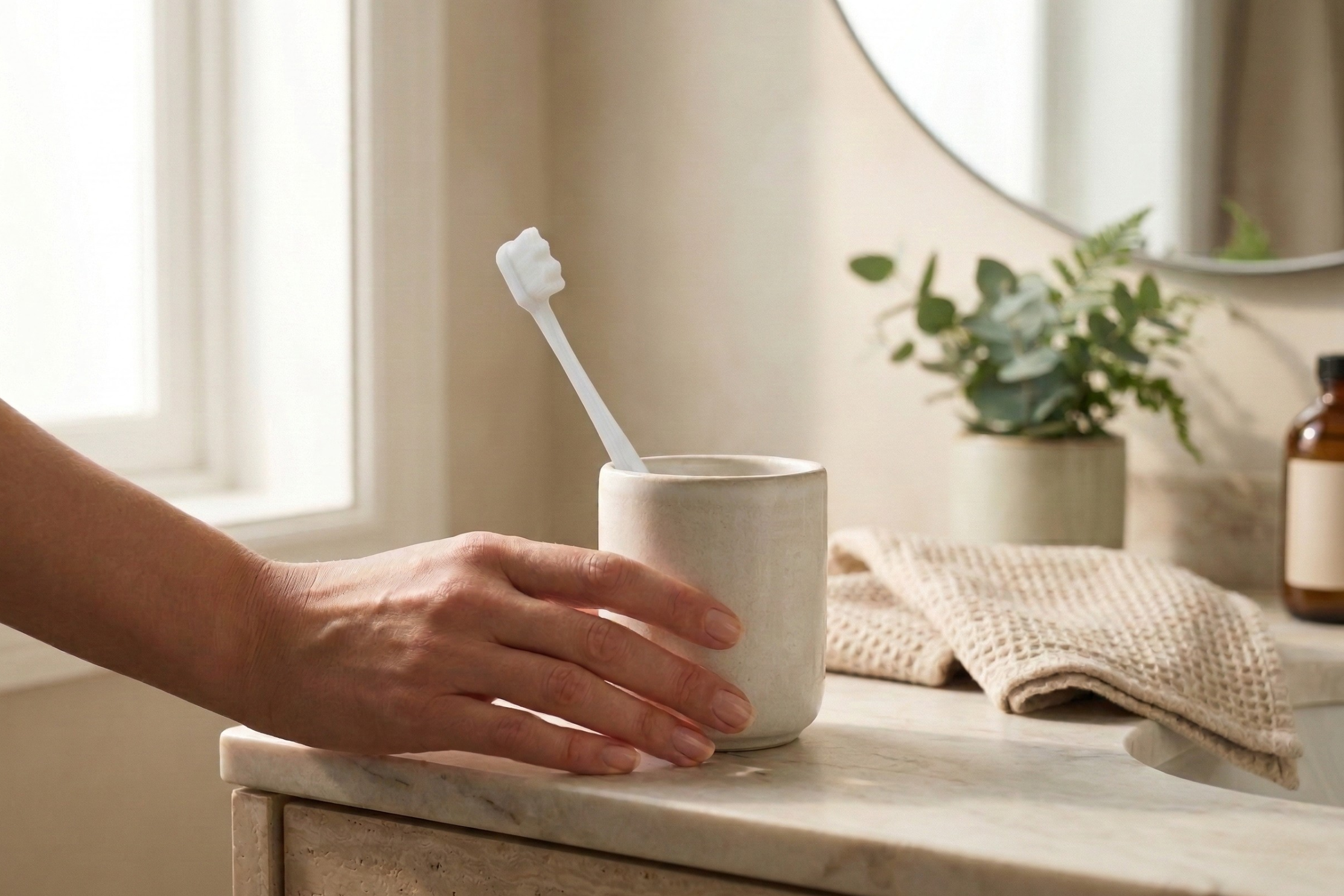
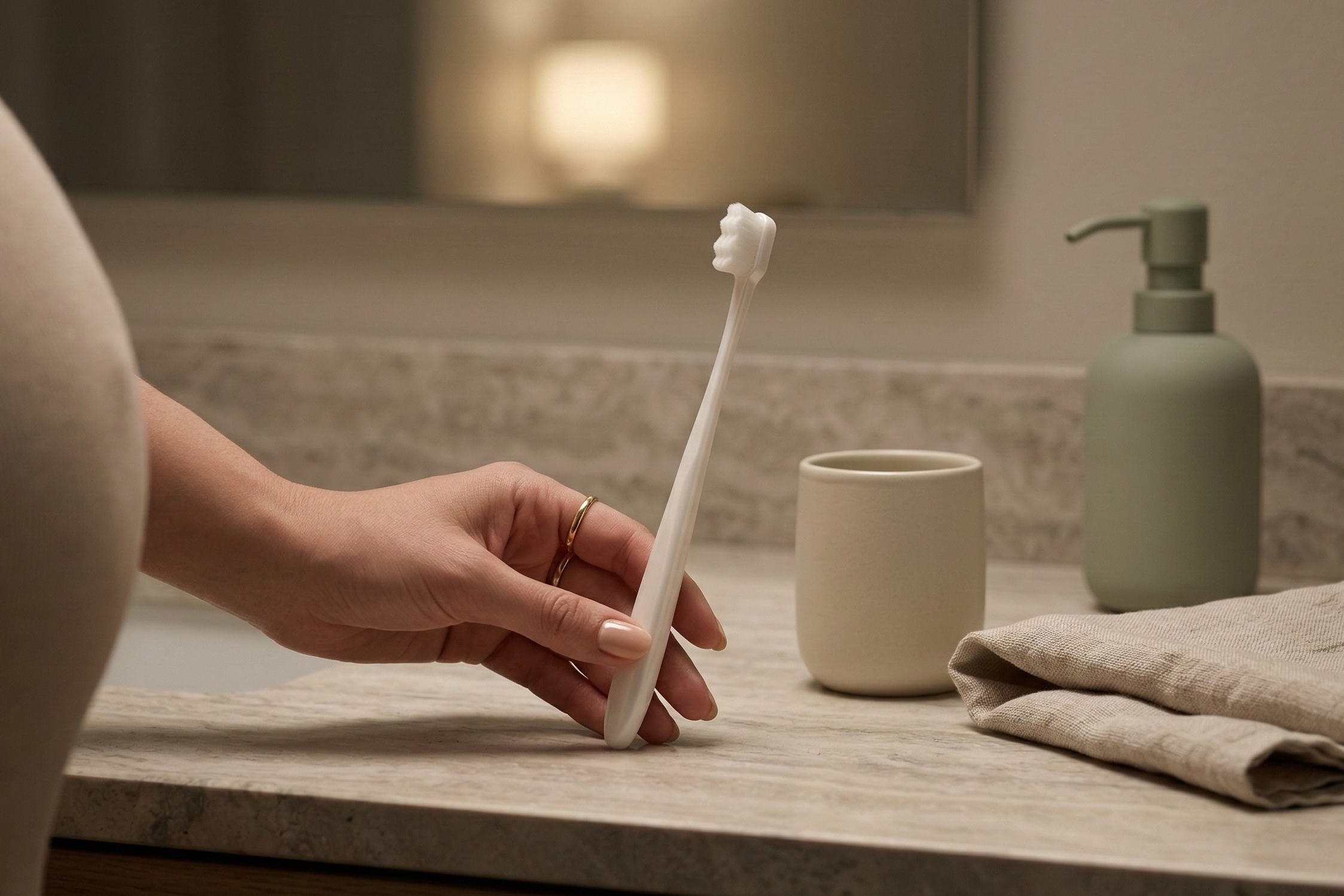
A softer brush, a lighter hand, slower movements, and a calmer approach can completely change how the routine feels. The goal is not to turn brushing into another thing to push through. The goal is to make it feel more manageable to return to.
Even small changes in texture and pressure can matter more than expected when the mouth feels delicate at the end of the day.
Small changes that can make nighttime brushing feel easier
When brushing feels harder to tolerate at night, small adjustments can make the routine feel more manageable.
Using less toothpaste can help reduce how intense the taste, texture, and foam feel in the mouth. If strong mint feels overwhelming, switching to a milder toothpaste can make the routine feel softer and easier to tolerate.
Starting more slowly can also help. When the mouth already feels sensitive, going in too quickly can make the sensation feel harsher than it needs to. A calmer start gives the body a little more space to adjust.
It may also help to brush a little earlier in the evening, before fatigue fully sets in. And if the back of the mouth feels especially difficult, moving more gently in that area can make the routine feel less stressful overall.
Sometimes the goal is not to change everything.
Just to reduce the amount of stimulation the body has to manage in that moment.
Make the routine feel easier to begin
Sometimes the hardest part is starting.
That is why it helps to make the evening routine feel as low-friction as possible. Keep the environment calm. Do not rush. Give yourself a little extra time. Let the moment feel supportive rather than demanding.
When brushing feels gentler from the start, the body has less reason to resist it.
And when the routine feels easier to begin, it becomes easier to keep.
Softness matters most in the moments that feel hardest
There is something important in noticing that brushing feels worse at night.
It does not mean you are failing your routine.
It means the routine may need to meet you differently in the evening than it does in the morning.
Pregnancy changes the body in rhythms as well as symptoms. What feels tolerable at one time of day may feel completely different at another. A supportive oral care routine respects that.
It does not demand the same experience from every moment.
It adapts.
The Dentine Care view
At Dentine Care, we believe oral care should feel more supportive when the body feels more sensitive.
That is why we offer the Mommy Brush, made to bring a gentler, more reassuring brushing experience to moments when the mouth feels more delicate than usual. Especially at the end of the day, when fatigue, sensitivity, and discomfort can feel more noticeable, softness can make all the difference.
When sensitivity changes, care should change too.